

GUARDRAILS
Secure your job site with high-performance guardrails designed to protect personnel and ensure strict OSHA compliance.
Guardrails for Residential & Commercial Projects
Engineered for Diverse Construction Environments
Our guardrail systems are designed to secure elevated work zones across all structure types, access conditions, and construction phases. We configure every installation to meet the specific physical demands of your job site, ensuring a tailored safety solution rather than a one-size-fits-all approach.
- Verified Compliance: Fully OSHA-compliant guardrail installations and inspections.
- Rapid Deployment: Fast response times to keep active projects on schedule.
- Consistent Quality: Standardized components for reliable, repeatable setups.
- Streamlined Reporting: Clear, accessible documentation for Superintendents, PMs, and GCs.
Guardrails made for your type of work
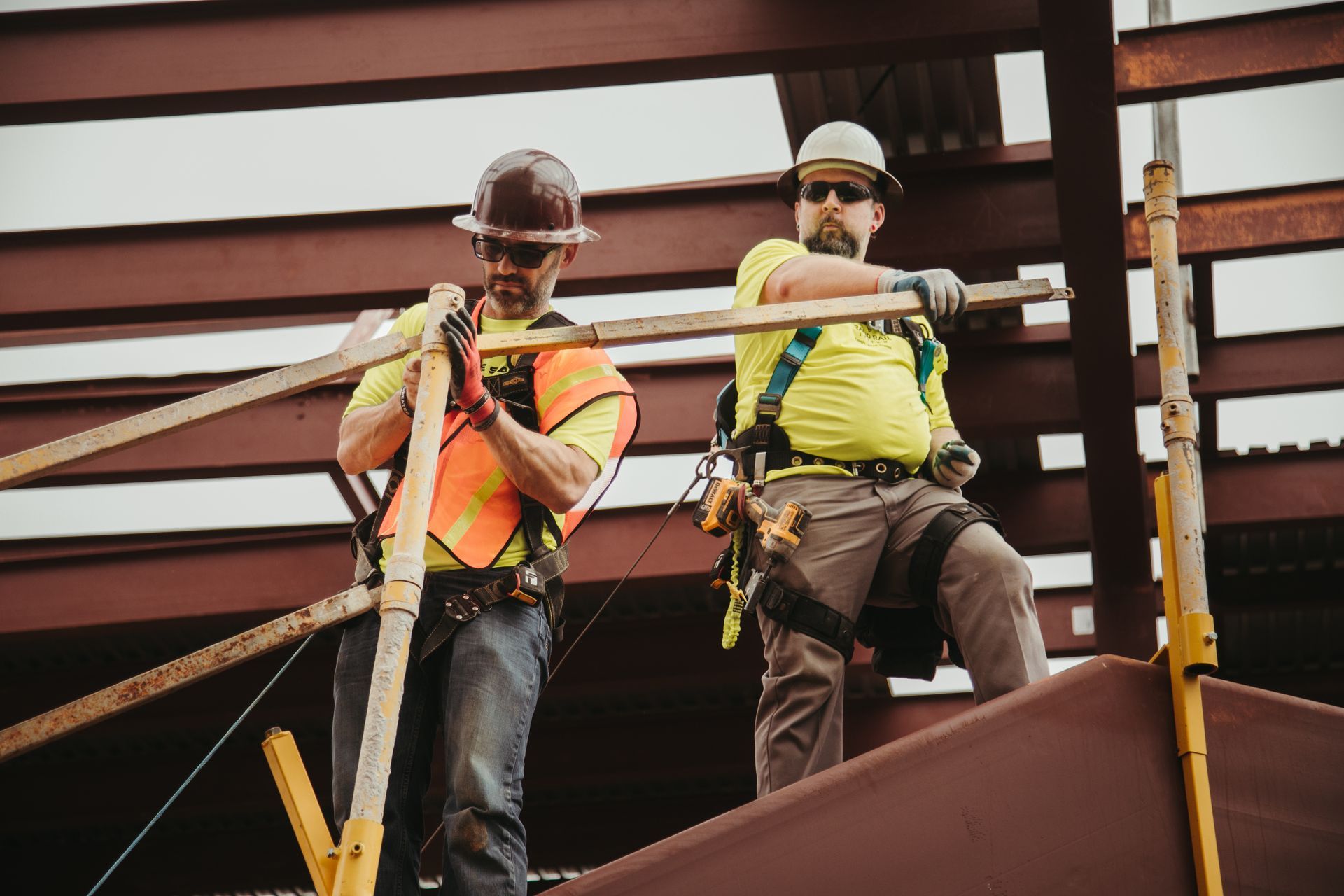
COMMERCIAL GUARDRAILS
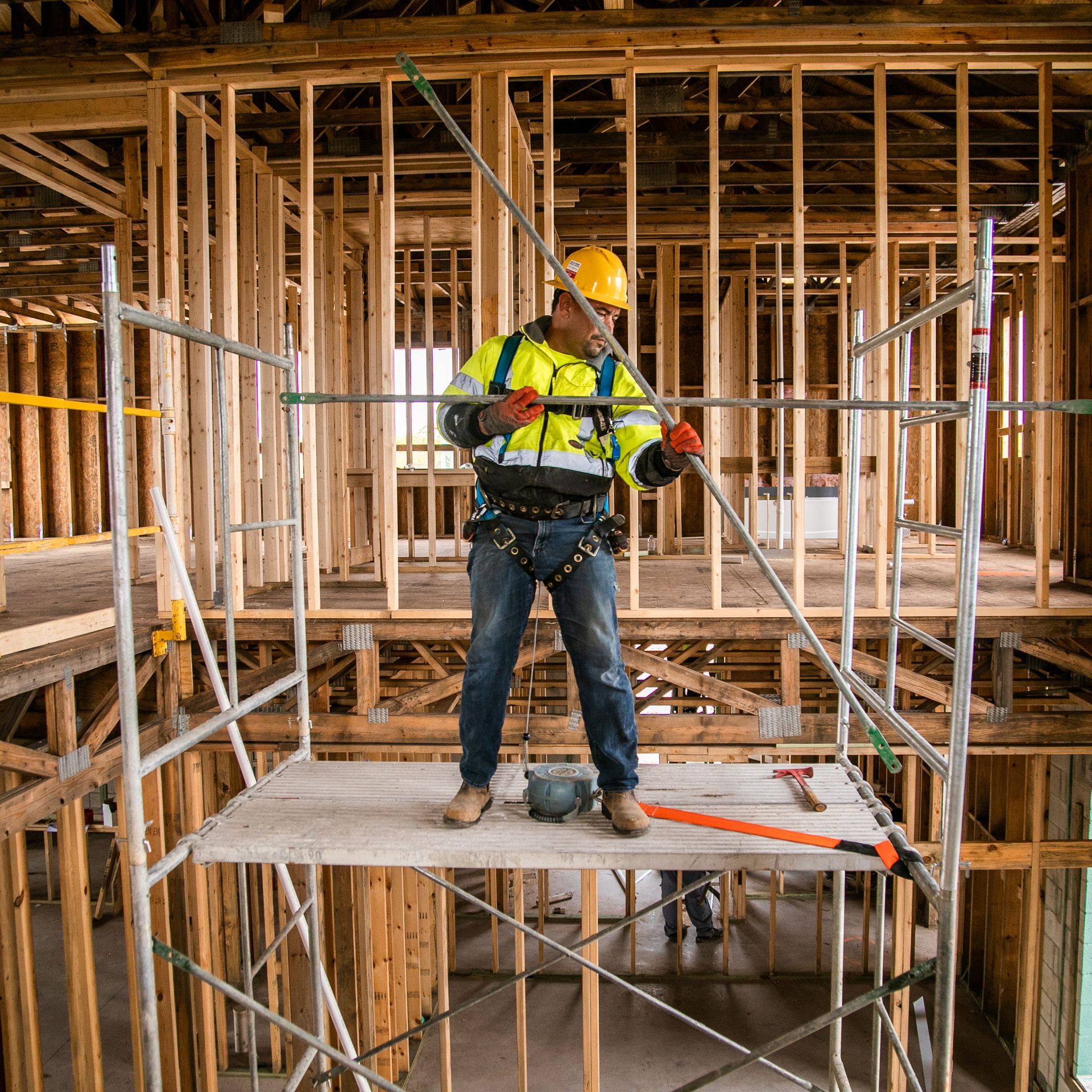
RESIDENTIAL GUARDRAILS
Different projects require different applications. Explore how fall protection systems are applied in residential and commercial environments.
What are Guardrails?
Guardrails are stationary barrier systems that serve as the primary line of defense against falls on construction sites. Classified as passive fall protection, they secure leading edges, roof perimeters, and floor openings without requiring active worker engagement or personal protective equipment (PPE).
Guardrails are commonly used for:
- Elevated decks and slabs
- Roof edges and leading edges
- Interior framing and structural work
- Maintenance and access operations
- Staircases
- Leading edge Fall Protection
Guardrails for Commercial Projects
Guardrail systems designed to eliminate fall hazards from your projects
Guardrails designed for all purposes from new construction to renovations. Ensure short term or long-term safety for contractors with our permanent and temporary guardrail solutions. Designed for all leading edges, flat roofs, mezzanines, and equipment platforms, these systems provide continuous passive fall protection for all phases of construction during your project.
Common applications:
- Multi-story projections
- Leading edge perimeter fall protection
- Leading edge fall protection during construction
- Facility and subcontractors and customers
- Industrial and manufacturing facilities
- Schools, campuses, and government buildings
- Multi-building portfolios
- Control access
Key benefits:
- Engineered a system to reduce risk
- Safety professionals installing to OSHA standards
- Over 20 years experience in construction safety
- Inspections and Documentation
Guardrails for Residential Homes
Engineered temporary fall protection to eliminate fall hazards from your job sites
Secure residential job sites with robust guardrail systems designed for the unique challenges of home building. Guardrails allow subcontractors to work efficiently without the movement restrictions of individual harnesses.
Common applications:
- Stairs and landings
- Balconies
- Elevators
- Basements
- Perimeter
- Leading edge
Key benefits:
- OSHA compliance
- Reduce risk and lower accident rates
- Efficent service and installation
- Affordable and highly effective
- Peace of mind for contractors
THE ONSITE SAFETY DIFFERENCE
Types of Guardrails We Install
We offer a range of guardrail solutions to match your environment and safety needs.
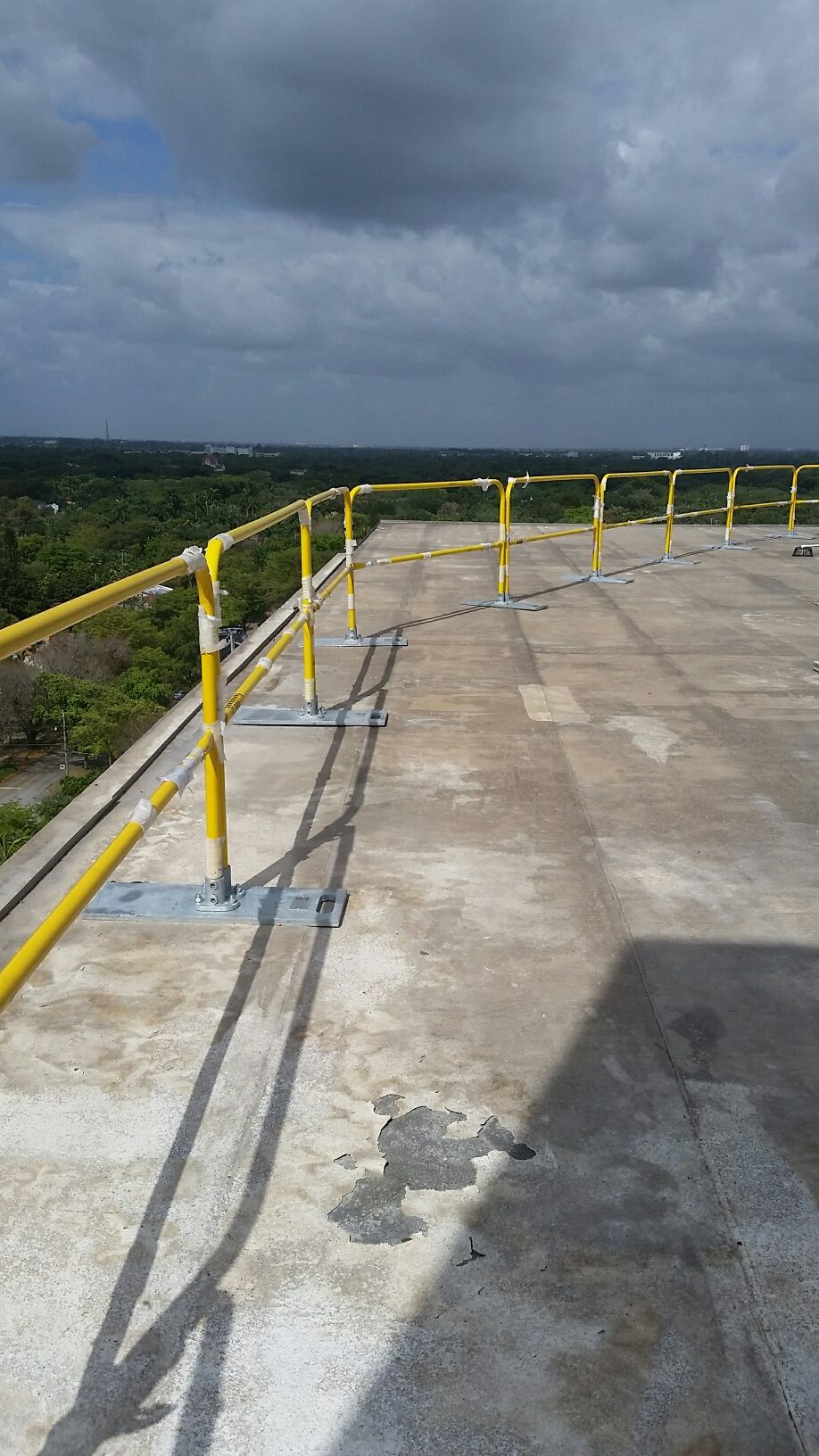
Non-Penetrating Guardrails
Freestanding, weighted base systems ideal for flat commercial roofs. They provide full OSHA compliance without piercing the roof membrane, preserving your building's warranty.
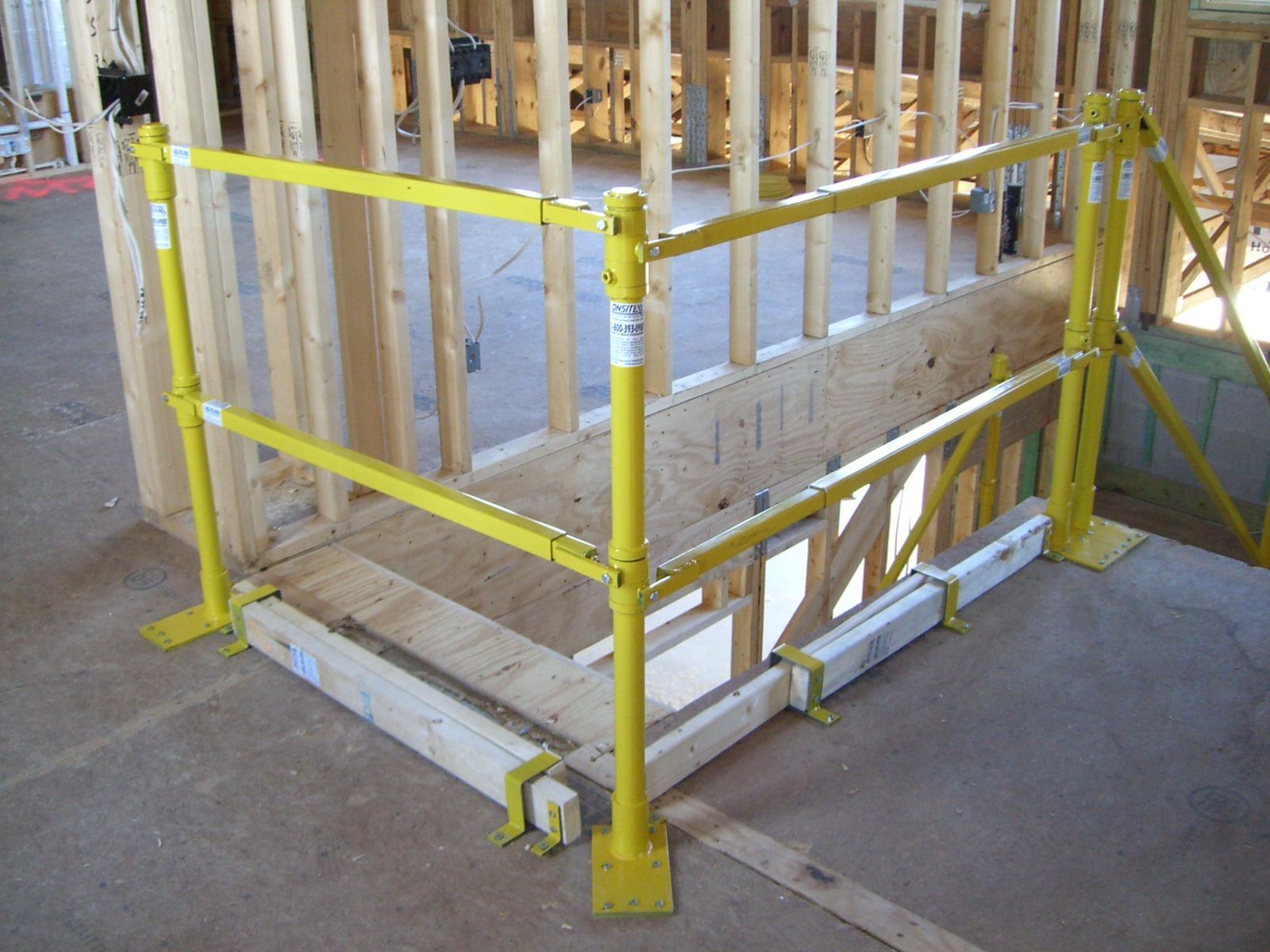
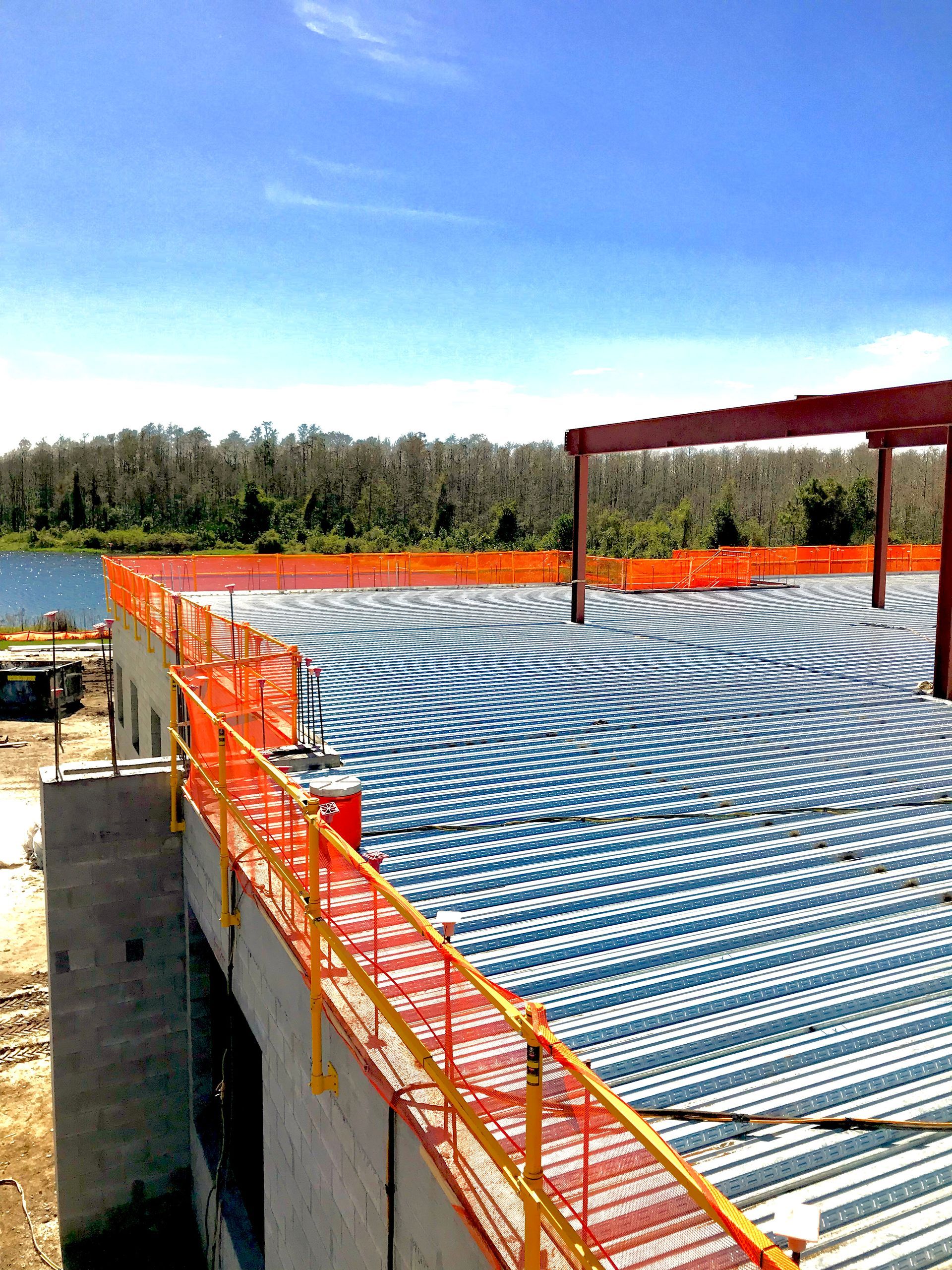
Freestanding Guardrails (Surface-Mounted)
Freestanding guardrails provide effective fall protection by securing directly to surfaces with wood screws or Tapcon fasteners, making them ideal for concrete, wood, or structural substrates while minimizing construction impacts.
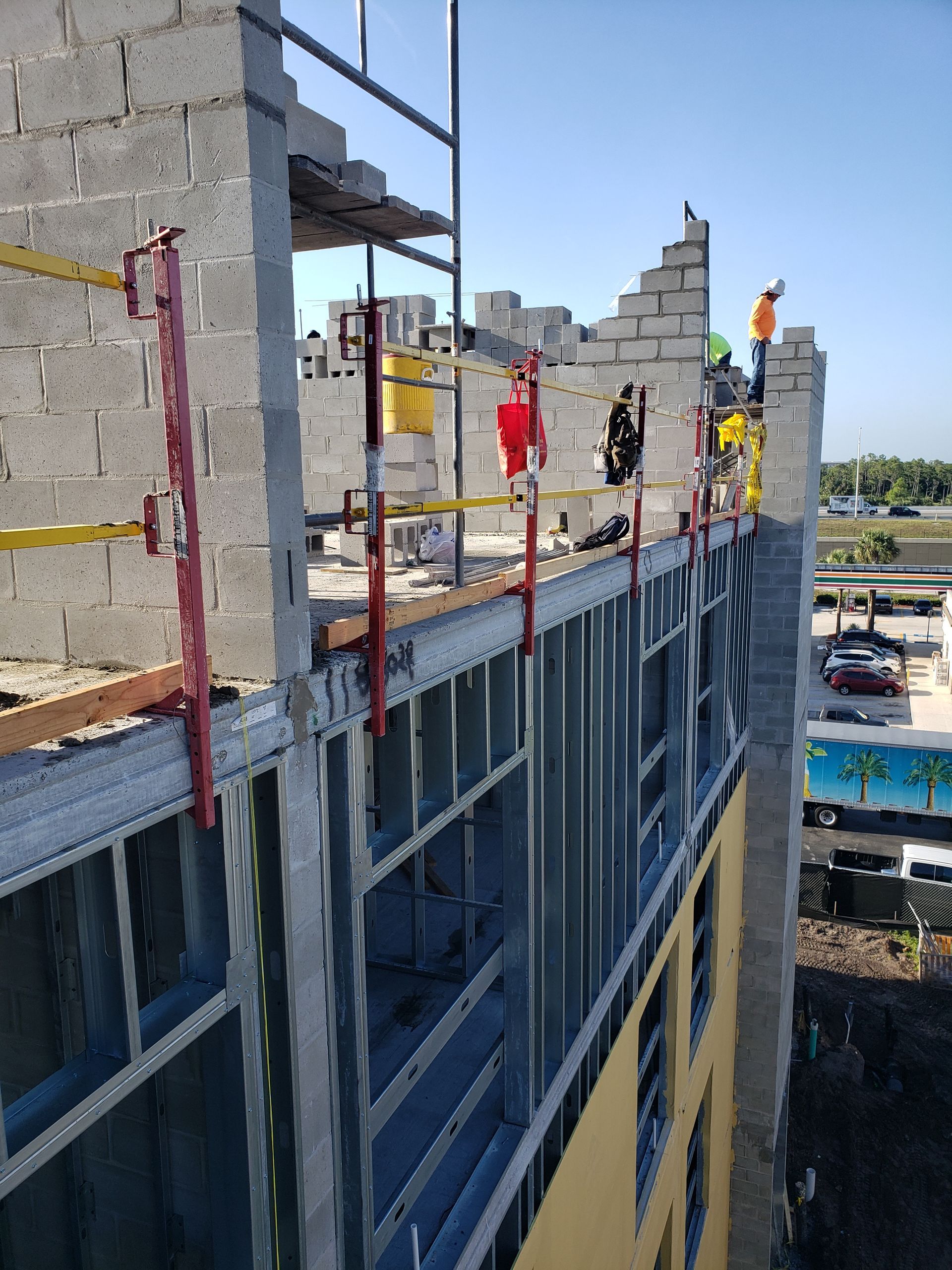
Side Mount Guardrails
Side mount guardrails are installed along the vertical face of a structure, such as the edge of a slab or platform. By attaching to the side rather than the top surface, they maximize usable workspace while maintaining full fall protection compliance. This makes them a great option for tight or high-traffic areas.
Clamping Guardrails
Clamping guardrails attach securely to structural edges with non-penetrating clamps. Quick to install and remove, they are ideal for temporary projects that require preserving the structure's integrity, providing reliable protection without drilling or permanent modifications.
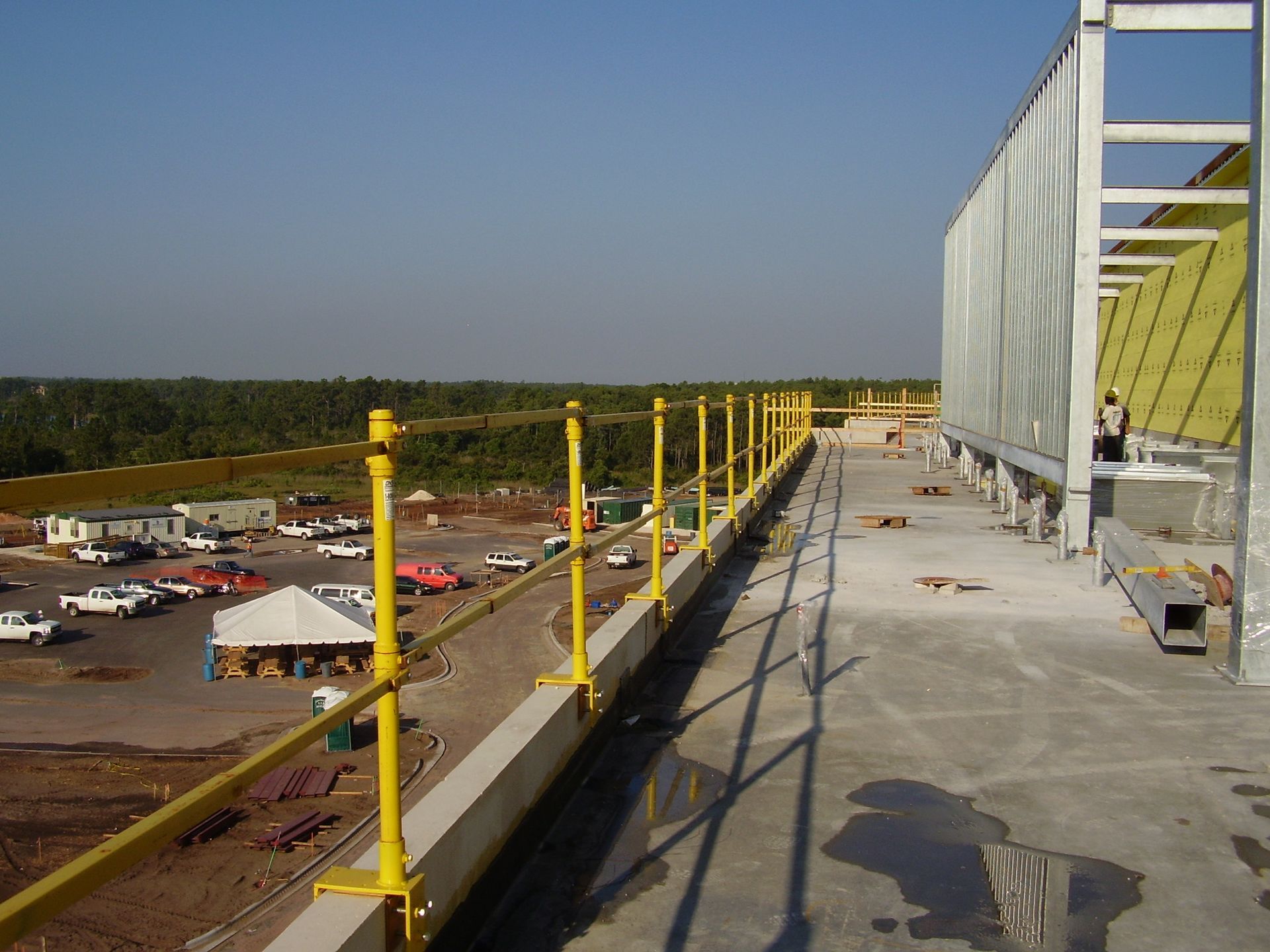
Parapet Guardrails
Parapet guardrails mount directly to parapet walls, offering safe edge protection on rooftops. They use the wall's strength for a secure barrier without roof penetration, making them an efficient and cost-effective solution for buildings with perimeter walls.
HOW IT WORKS
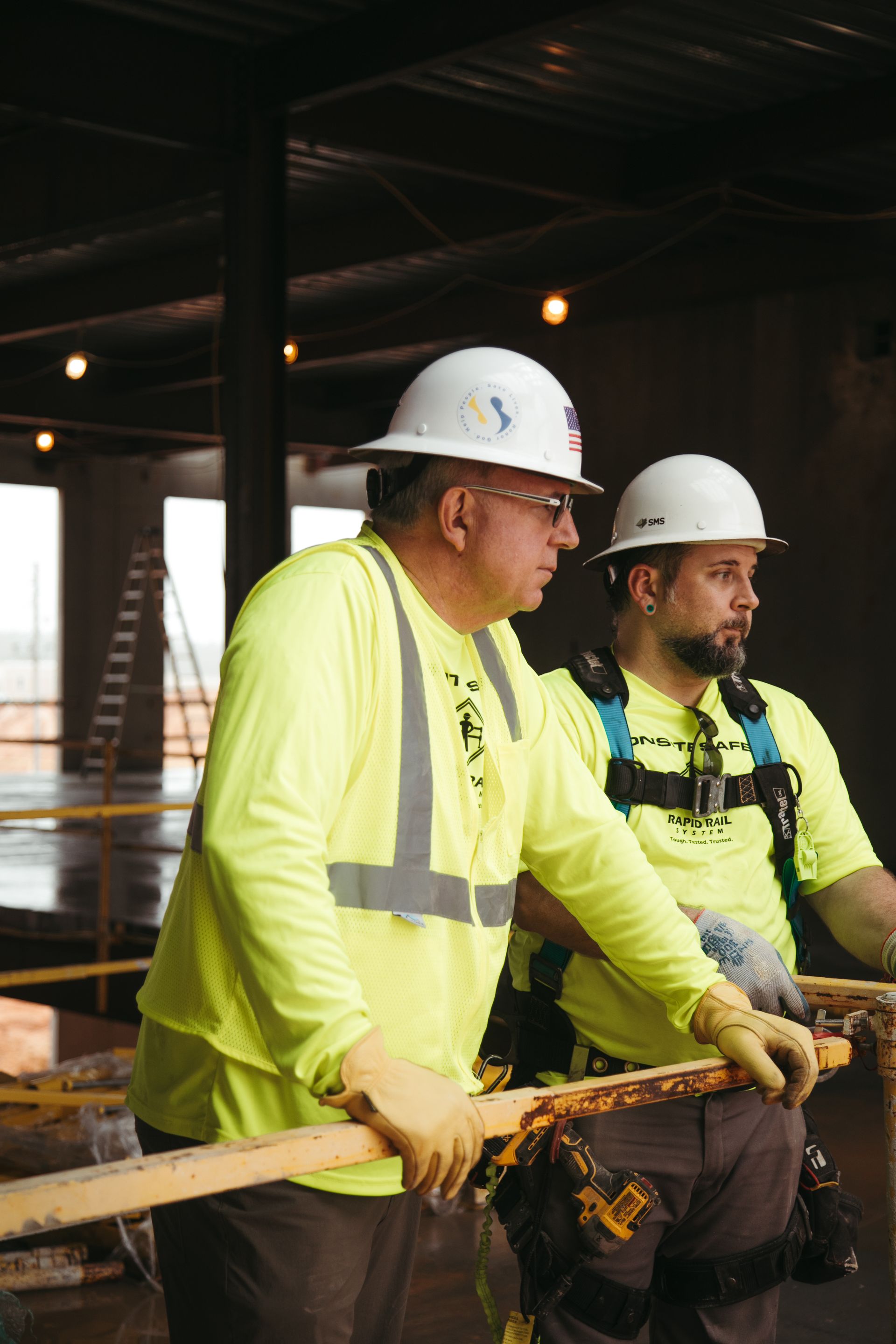
A safe anchor system requires more than hardware—it requires expertise. Our process ensures your anchors are installed correctly and documented properly.
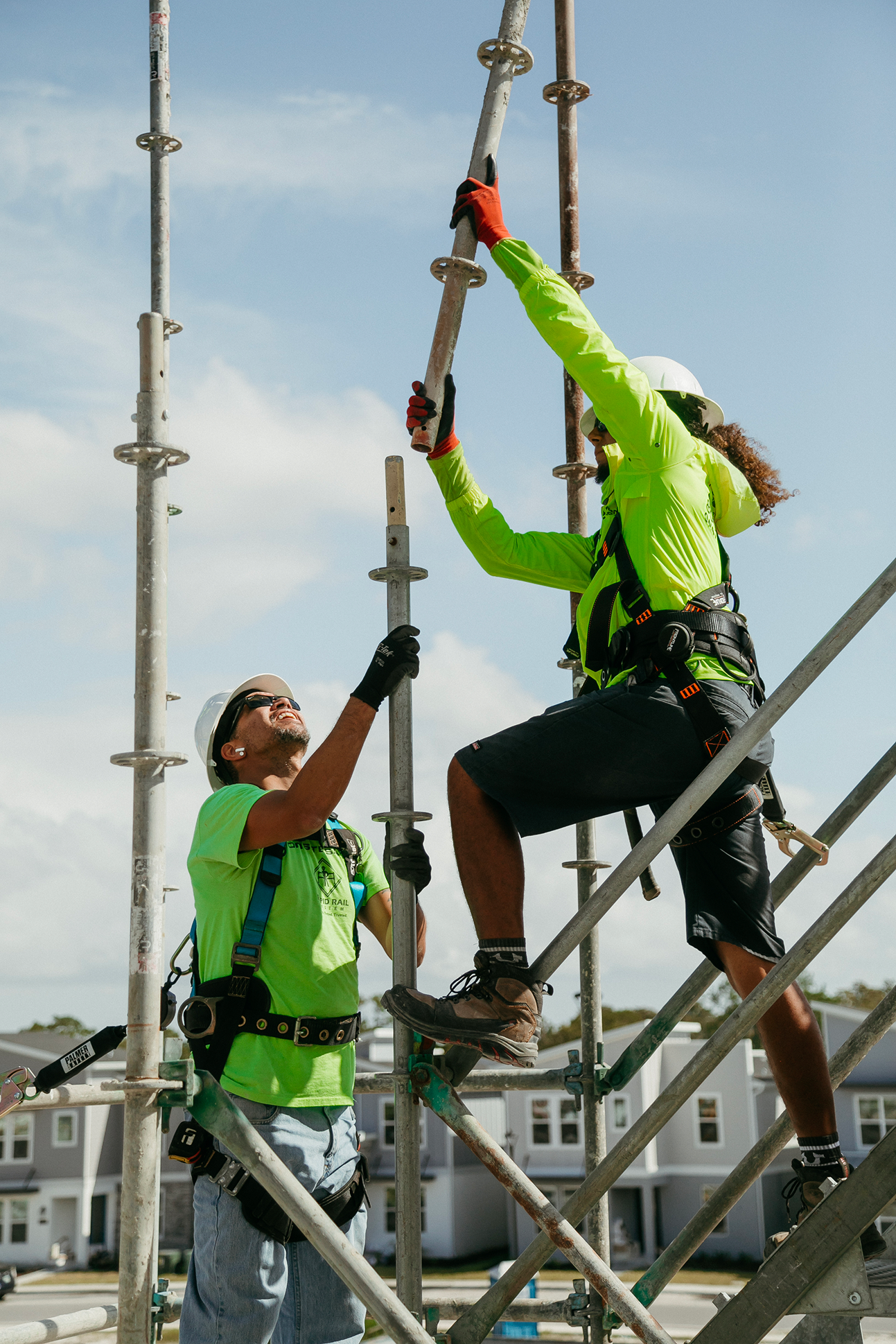
1. Site Assessment
We evaluate your roof or structure, map hazards, and determine the anchors needed.
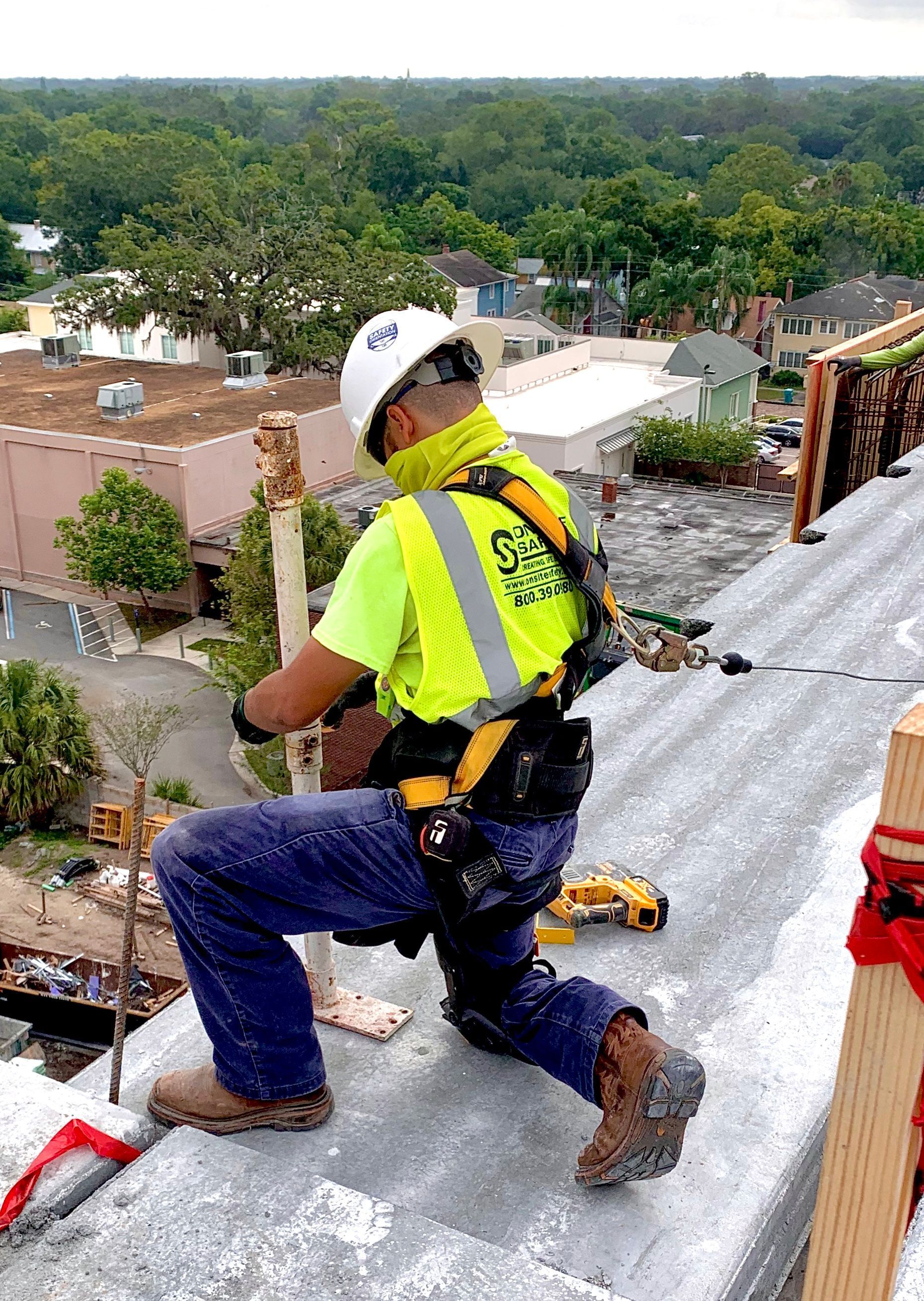
2. Engineering Review
Anchors are selected or custom-engineered
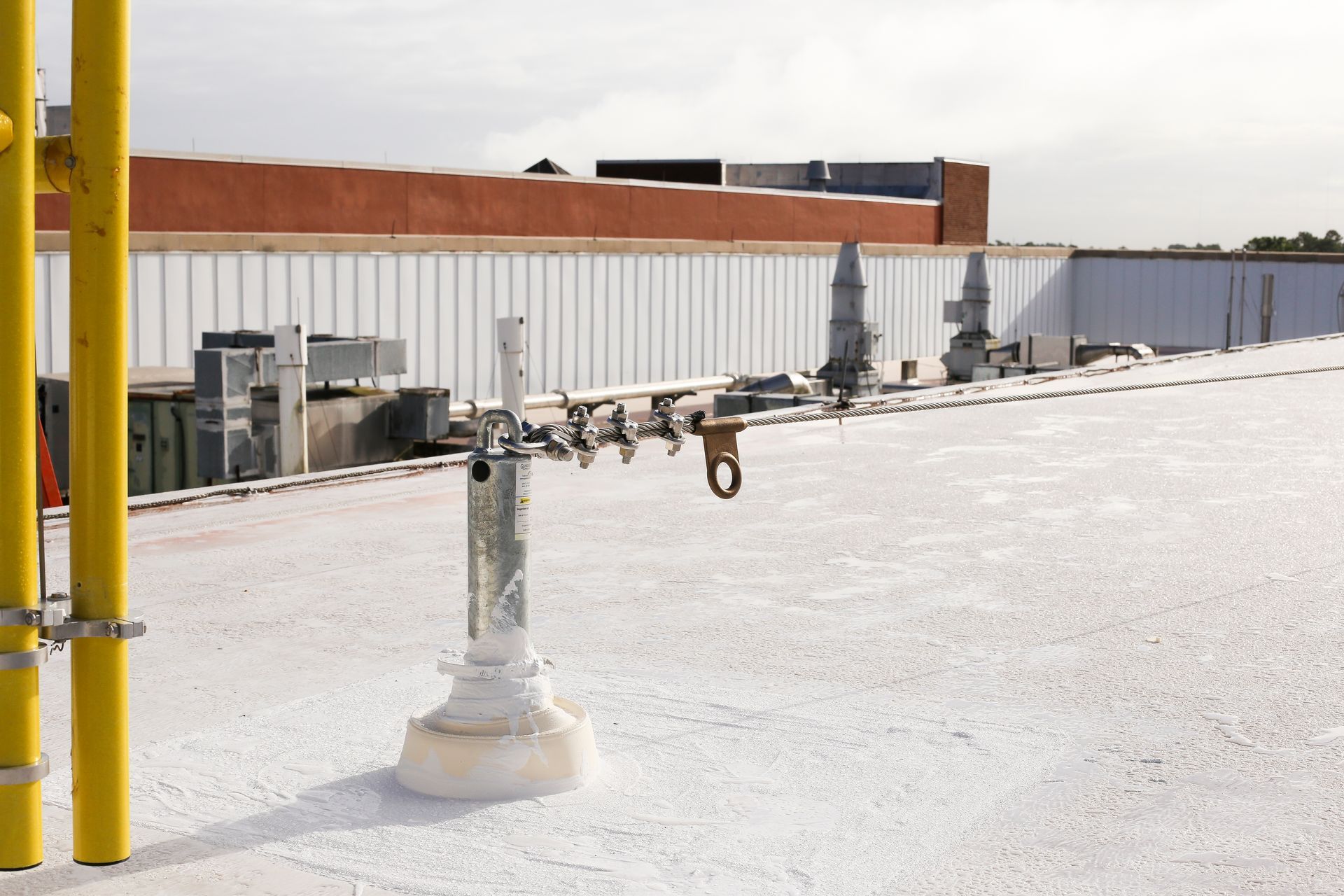
3. Professional Installation
Our certified technicians securely install your anchor system according to engineering specifications and safety standards.
4. Load Testing and Certification
We perform rigorous pull-testing on installed anchors to verify capacity and issue formal certification for compliance.
5. Training and Orientation
We provide hands-on instruction for your team on how to properly inspect, connect to, and use the installed anchorage system.
6. Documentation Package
You receive a comprehensive closeout binder containing system drawings, test results, warranties, and user manuals for future reference.
1. Site Assessment
We evaluate your roof or structure, map hazards, and determine the anchors needed.
2. Engineering Review
Anchors are selected or custom-engineered
3. Professional Installation
Our certified technicians securely install your anchor system according to engineering specifications and safety standards.
4. Load Testing and Certification
We perform rigorous pull-testing on installed anchors to verify capacity and issue formal certification for compliance.
5. Training and Orientation
We provide hands-on instruction for your team on how to properly inspect, connect to, and use the installed anchorage system.
6. Documentation Package
You receive a comprehensive closeout binder containing system drawings, test results, warranties, and user manuals for future reference.
FAQs
Answers to the most common questions from residential contractors, commercial builders, and jobsite safety teams.
How much force must a guardrail withstand?
According to OSHA standards, the top rail of a guardrail system must be capable of withstanding a force of at least 200 pounds applied in a downward or outward direction, without failure.
Can guardrails be installed on any roof type?
Yes. There are versatile mounting options available for nearly every scenario, including clamping systems for parapets and slabs, boot systems for steep-slope residential roofs, and weighted base systems for flat commercial roofs.
Do guardrail systems require inspections?
Yes. Guardrails should be inspected regularly by a competent person, particularly after installation, relocation, or severe weather events, to ensure components remain secure and structural integrity is maintained.
Are non-penetrating guardrails safe?
Absolutely. Non-penetrating (weighted) guardrails are engineered to meet strict OSHA load requirements using counterweights and friction. They are an excellent solution for preserving roof warranties on flat commercial surfaces.
OUTCOMES
Safer crews. Fewer delays. One standard.
Fall protection systems help maintain safe access, support compliance, and provide consistent protection wherever work is performed at height.
Need Support on Your Next Project?
Talk with a safety specialist to determine the right guardrail solution for your project.

 FREE INSTANT ESTIMATE